At 10 AM, a Facebook lead comes in. At 11:30, someone fills out the website form. By afternoon, another enquiry arrives through a referral. Three leads, three sources—and three different people trying to figure out who should follow up.
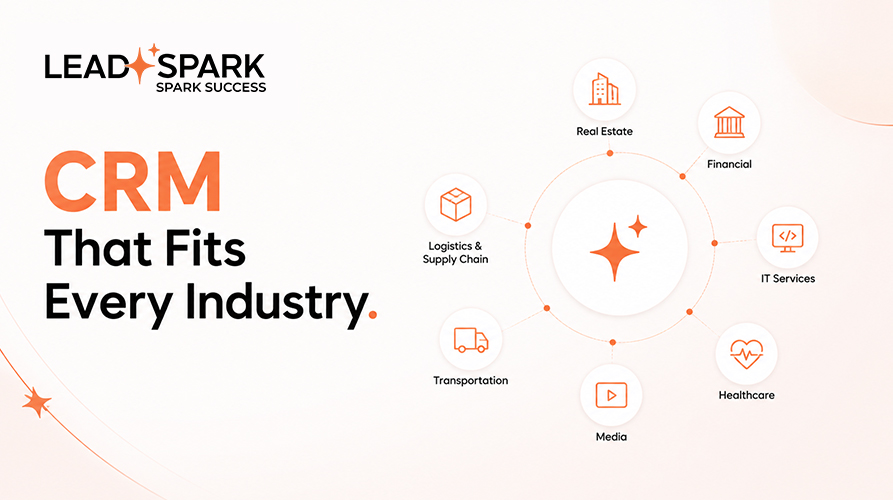
A real estate developer receives property enquiries, a hospital receives appointment requests, a manufacturer receives technical requirements and an IT company receives demo or consultation requests. The lead source, customer profile and sales cycle may differ, but every business needs a reliable process to capture, qualify, assign, follow up and measure its leads. This is where CRM becomes essential.
An Online lead management system is not simply a database of customer names and phone numbers. It acts as a structured layer between marketing and sales, connecting lead acquisition with routing, qualification, communication, pipeline management and conversion. The important point is that CRM requirements are universal, but CRM workflows need to be industry-specific.
Industry-Specific CRM Workflows
Different industries generate different types of leads, so the information sales teams need and the way they manage those leads can vary considerably.
Real Estate: Property sales depend heavily on enquiry speed and structured follow-up. CRM can help teams capture property preference, budget, preferred location, configuration, site-visit status and purchase intent while keeping the complete interaction history connected to the opportunity.
Finance: Financial services often require detailed qualification before a prospect becomes an opportunity. A CRM can organise product interest, customer requirements, eligibility-related information, follow-ups and documentation stages, giving sales teams better control over a multi-stage process.
IT & Software: A software lead may begin with a demo request, consultation or website enquiry before moving into discovery calls, technical discussions, proposals and negotiations. CRM keeps these interactions connected so sales teams can clearly see where each opportunity stands.
Manufacturing: Industrial sales often involve longer buying cycles and several stakeholders. Product specifications, quantities, technical requirements, quotations, negotiations and follow-ups need to stay organised rather than being scattered across spreadsheets and emails.
Healthcare: Healthcare businesses manage a different type of customer journey, with enquiries related to services, appointments, departments and follow-up communication. A structured CRM workflow can help teams organise these enquiries and maintain timely communication.
Education: Admission and course enquiries can arrive in high volumes, particularly during enrolment periods. CRM can help institutions distribute enquiries, track counselling interactions, monitor application stages and identify prospects that require additional follow-up.
Logistics: Logistics companies frequently deal with requirement-driven enquiries involving routes, shipment details, service requirements and quotations. CRM helps sales teams track these opportunities from the initial enquiry through commercial discussions and closure.
Hospitality: Hotels, event venues and hospitality businesses manage booking enquiries, corporate requirements, event requests and customer follow-ups. CRM provides visibility into these conversations and helps teams manage opportunities across different stages.
Cybersecurity: Cybersecurity sales often involve high-value B2B opportunities where prospects may require consultations, assessments, demonstrations, technical evaluations and proposals before making a decision. CRM provides the pipeline structure required to manage these longer sales journeys.
Across all these industries, the workflow changes—but the fundamental requirement remains identical: no lead should disappear between acquisition and conversion.
Automated Lead Routing Systems
Generating leads is only the beginning. Once an enquiry enters the business, it needs to reach the right person quickly and enter the correct workflow.
This becomes difficult when businesses rely on spreadsheets, email forwarding or manually assigning enquiries through messaging platforms. As lead volume increases, ownership becomes unclear. Some leads may remain unassigned, some may receive delayed responses, and others may be contacted multiple times by different salespeople.
Automated lead routing solves this operational gap by applying predefined rules to incoming enquiries. A lead can be assigned according to location, product interest, service category, sales territory, campaign, customer segment or team.
For example, a real estate enquiry for a particular project can be routed to the relevant sales team, while a manufacturing enquiry requiring a specific product category can reach the appropriate sales representative. This reduces manual intervention and creates accountability from the moment the lead enters the system.
This is one of the important capability’s businesses should evaluate when looking for the best lead management software. The value of CRM is not simply storing information; it is creating a repeatable process that ensures every enquiry has an owner, a status and a next action.
Lead qualification can also be incorporated into the workflow. Sales teams can categorise leads according to intent, requirements, budget, product interest or other business-specific parameters. This allows high-priority opportunities to receive appropriate attention while lower-intent prospects can enter structured nurturing workflows.
Multi-Source Lead Integration
Today's businesses rarely generate leads from a single channel. A company may receive enquiries from its website, Google Ads, Facebook campaigns, Instagram, landing pages, referrals, marketplaces, exhibitions and offline marketing activities.
Without integration, these channels create fragmented lead data.
A Facebook lead management tool can connect social-media-generated enquiries with the CRM workflow, allowing a lead captured through an advertising campaign to move into assignment, qualification and follow-up instead of remaining isolated within the advertising platform.
The same principle applies to website enquiries and other digital channels. An online lead management system can bring leads from multiple sources into a centralised environment where sales teams can manage them through the same structured process.
The complete journey can be represented as:
Lead Source → Lead Capture → Automated Assignment → Qualification →
Follow-Up → Opportunity → Conversion
This creates an important connection between marketing and sales.
Instead of measuring a Facebook campaign only by the number of leads generated, businesses can track what happened after those leads entered the CRM. Which leads were contacted? Which became qualified opportunities? Which salesperson handled them? How many converted? Which campaign produced the highest-value opportunities?
This is where CRM lead generation becomes more meaningful. Lead generation should not end when a form is submitted. The real measurement begins when the business starts managing what happens next.
Pipeline Analytics and Conversion
Once lead capture, routing and follow-up are structured, businesses need visibility into the performance of the entire pipeline.
A CRM can provide information about lead sources, qualification rates, pending follow-ups, sales stages, lost opportunities and conversion performance. This helps management identify where the sales process is working and where leads are being lost.
For example, a business may generate a high number of leads but discover that a significant percentage never receives a first response. Another business may have excellent response rates but lose opportunities during qualification. A third may generate qualified leads successfully but struggle to convert proposals into closed deals.
Without pipeline data, these problems are difficult to identify.
LeadSpark brings lead capture, automated workflows, lead tracking, follow-up management and pipeline visibility into one platform, allowing businesses to create structured sales processes around their industry requirements.
The industries may be different. Their products, customers
and sales cycles may be different. But the underlying requirement remains the
same:
Capture every lead. Route it correctly. Follow up consistently. Measure the
journey. Convert more opportunities.
Build a Lead Management System Around Your Industry
Your business should not have to adapt its sales process to a generic system. Your CRM should adapt to the way your industry actually generates and converts leads.
With LeadSpark, bring your enquiries, sales activities, follow-ups and pipeline data into one structured environment.
Every delayed follow-up is a potential booking lost to a competitor. Discover how LeadSpark helps developers capture every inquiry, automate follow-ups, and convert more buyers with a single intelligent CRM platform. Schedule a free demo today and experience the difference.
FAQs
1. Why does every industry need CRM?
Any business that depends on enquiries and customer acquisition can benefit
from CRM. The platform provides a structured way to capture, assign, qualify,
follow up and track leads throughout the sales cycle.
2. Is CRM useful for industries other than real estate?
Yes. CRM can support industries including finance, healthcare, manufacturing,
IT, education, logistics, hospitality, cybersecurity and media. The workflows
and qualification criteria can be adapted to each industry's requirements.
3. What makes the best lead management software
effective?
Effective lead management software should provide lead capture, automated
assignment, qualification, follow-up tracking, pipeline management, reporting
and integration with relevant lead sources.
4. How does a Facebook lead management tool help sales
teams?
It brings Facebook-generated enquiries into the sales workflow, allowing teams
to assign, qualify, follow up and track those leads rather than treating the
advertising form submission as the end of the process.
5. What is an online lead management system?
An online lead management system centralises leads from different sources and
allows sales teams to manage enquiries, follow-ups, activities and pipeline
stages from a connected platform.
6. Can CRM workflows be customised for different
industries?
Yes. Industry-specific fields, qualification rules, sales stages, assignment
logic and follow-up processes can be configured according to how each business
manages its customer journey.